
Alternative Energy for Mining Cryptocurrencies — From Idea to Running Rigs
Most mining operations say the same thing when you first meet them: “Power is our business.” Hardware comes and goes, hashprice swings, but your $/kWh and uptime decide whether you grow or slowly bleed. That’s why “alternative energy” isn’t a PR label anymore — it’s a design choice that can lock in lower, more predictable costs and keep rigs hashing when the grid gets ugly.
What “alternative” actually means for a miner
In practice it’s simple: you pull cheap, clean electricity from sources the grid underuses (solar, wind, run-of-river hydro, geothermal) and you shape it to your load with storage, flexible dispatch, and sensible cooling. The point isn’t to go off-grid at any cost — the point is to make your site behave like a power asset that earns value (demand-response, curtailment relief) instead of only paying bills.
The typical stack
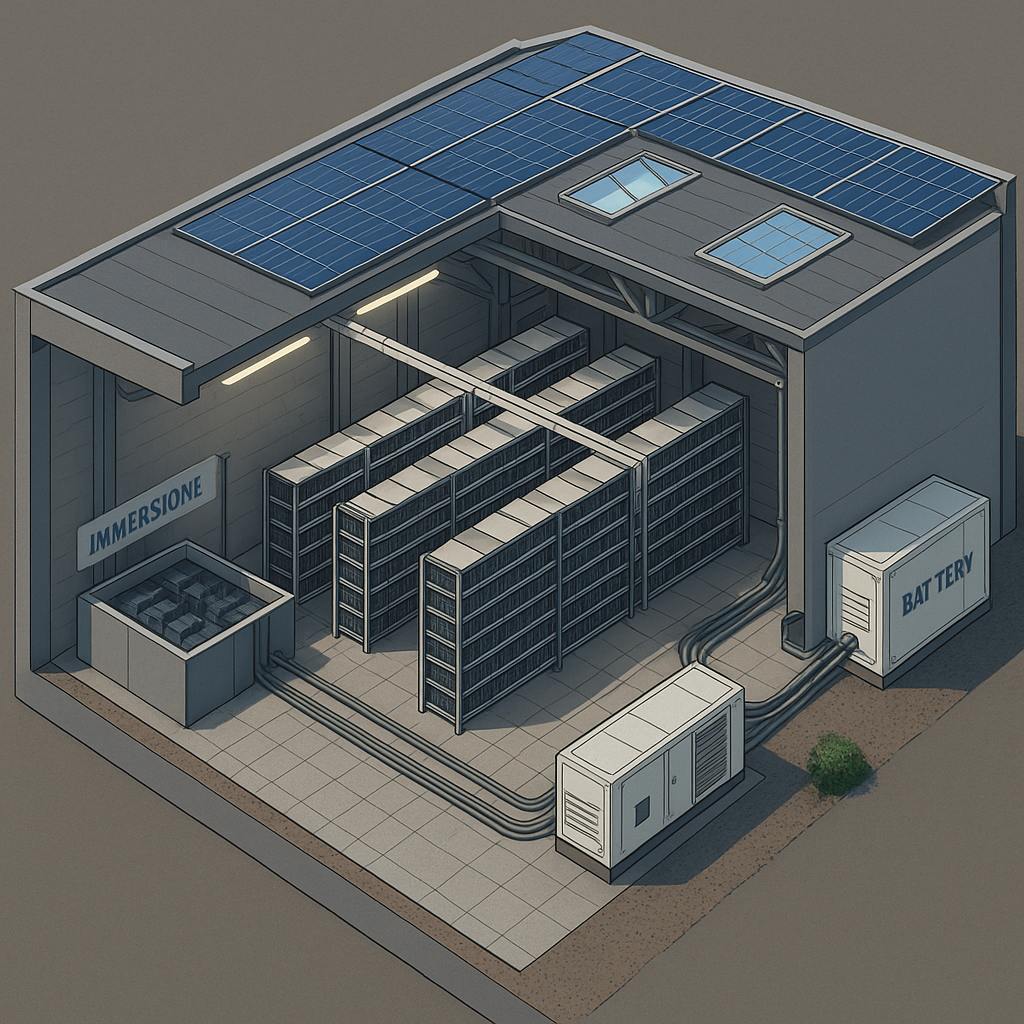
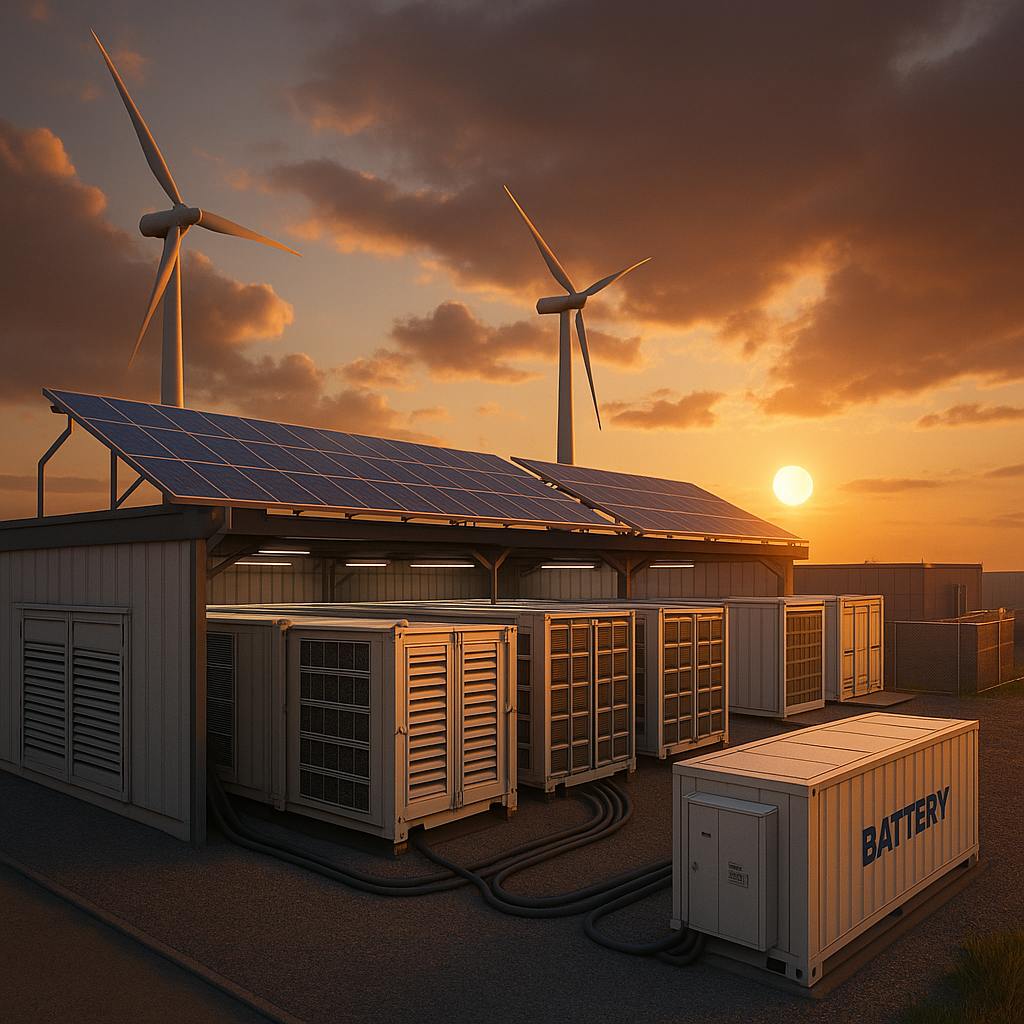
Imagine a rectangular yard with containers. On the roof of the admin building and above parking rows sit PV canopies. A small battery (1–2 hours) lives in a steel enclosure near the main switchboard. Behind it, an energy-management system (EMS) watches price signals, the weather, and your hashboard telemetry. Midday sun arrives? EMS soaks it, pushes non-critical loads forward, and charges the battery. Evening peak shows up? It shaves the spike; you avoid demand charges and keep fans calm. If you’ve sited near steady water flow or a windy ridge, hydro or wind complements the solar bell-curve and reduces how hard the battery must work.
Picking the right resource (and why)
- Solar PV is the default: fastest to deploy, predictable, modular. Parking canopies double as shade and brand lift, rooftops require minimal civil works.
- Onshore wind shines where night winds are real. It’s a terrific partner to PV but needs setbacks, acoustic modeling, and honest wind data.
- Small hydro/run-of-river is the quiet hero: near-baseload output with little land. If you can lease an old site, economics can be outstanding.
- Geothermal is true 24/7. If you’re lucky on location, you win on uptime and minimal footprint.
- Methane-to-power (flare, landfill) is transitional but powerful: you cut methane emissions and get low LCOE. Treat it as a bridge, not a forever plan.
- Green-sleeved PPAs/RECs help when you can’t host generation. You won’t get the on-site resiliency, but you still de-risk carbon and sometimes price.
How the day really runs
At 10:15 a.m., PV output peaks. EMS intentionally over-clocks cooling to build thermal headroom and charges BESS to cover the late-afternoon shoulder. At 5:30 p.m., the grid price spikes; EMS trims non-critical circuits, taps the battery, and steps fans instead of slamming them. Midnight wind picks up; mining goes full tilt, battery idles, and you capture cheap kWh. None of this needs human hands once it’s tuned — your job becomes setting guardrails, not babysitting.
Sizing without spreadsheets (yet)
Start with your IT load (rigs × kW per rig). Add facility overhead based on cooling: with immersion, PUE ≈ 1.03–1.10; with air, ~1.15–1.30. That total is your target to cover or offset.
- PV: size to your land/roof first. Capacity factor and latitude decide annual coverage; treat canopies as bonus area that also keeps the site usable.
- BESS: begin modestly — 1–2 hours of average site demand usually captures most of the peak-shaving and PV-shift value. If time-of-use spreads widen, expand later.
- Wind/hydro: let resource data lead. Don’t force wind into a poor regime; do chase hydro if there’s an existing weir or small dam.
A sanity check you’ll love to do: compare your blended cost (on-site LCOE + grid imports after DR credits) to current tariff + demand charges. If you don’t beat it or improve resilience, change the mix.
Cooling, noise, and the secret cashflow — heat reuse
Air cooling is cheaper to start, but noisy and touchy in heat waves. Immersion reduces fan noise, tightens PUE, extends hardware life, and opens the door to heat reuse. Selling or using low-grade heat turns a cost center into a trickle of revenue (pools, greenhouses, DHW preheat, or even absorption chillers for hot climates). Capture that as a thermal offtake credit in your model; you’ll be surprised how it moves the needle.
Siting: where the wins (and pain) hide
Pick maps and permits over romance. You want:
- Resource quality (insolation/wind/flow),
- A grid that wants you (capacity, interconnect queue, curtailment rules),
- Straightforward land (access, setbacks, visuals, wildlife),
- Backhaul (fiber or a solid alternative),
- No water drama (if evaporative systems are in play).
Talk to the utility early. Miners who arrive as flexible loads (“We can drop 3 MW in two seconds when you ping us”) get better conversations than miners who look like stubborn constant demand.
Risks you can manage
- Price risk: run three hashprice scenarios; don’t hinge survival on the hottest case.
- Weather risk: pair resources (PV + wind), keep a battery, and write curtailment clauses you can live with.
- Hardware risk: standardize SKUs, keep 2–5% spares, plan refresh cadence — don’t die on a single fan line.
- Regulatory/community: zero stealth. Explain your carbon math, noise plan, and outage behavior. It pays back on permitting and PR.
A 90-day action plan
Weeks 1–2 — Feasibility. Pull 15-minute load profiles, get local resource data, sketch PV/BESS/wind/hydro options. Draft a one-pager with CAPEX bands, PUE, and blended $/kWh.
Weeks 3–8 — Design & interconnect. One-lines, protections, EMS logic, DR enrollment path, environmental filings. Lock layout (containers, canopies, BESS pads).
Weeks 9–13 — Procure & prepare. Order gear with realistic lead times, schedule civil/electrical, finalize commissioning tests.
Weeks 14–26 — Build & tune. Commission in blocks, set EMS guardrails, watch a hot week and a windy night, then freeze set-points.
What investors actually want to see
A clean slide with: your blended $/kWh, % of self-generation, tCO₂e avoided (methodology noted), demand-charge reduction achieved, curtailment captured (MWh), and a PUE trend as you move toward immersion. Add IRR/payback bands for conservative, base, and aggressive cases.
Bottom line
Alternative energy for mining is not about going off-grid to prove a point. It’s about building a site that buys cheap electrons when they’re plentiful, makes its own when it’s smart, rides through peaks, and shows the community you’re adding resilience — not strain. If you can do that with a PV canopy, a modest battery, a cool-headed EMS, and a realistic plan, you’ll spend more time scaling and less time apologizing to our P&L.